
Mandit Global builds B2B email programs around the same principles this guide just walked through: real segmentation instead of one list for everyone, deliverability treated as infrastructure instead of an afterthought, and nurture sequences built around what your buyers are actually asking, not a generic drip template. If your list has the contacts but not the replies, that’s usually a strategy gap, not a tool gap, and it’s exactly where we start.

B2B Email Marketing: What Actually Works
Most B2B email marketing fails for one reason: it is built to send emails, not to start conversations. Templates get copied, sequences get scheduled, and then teams wonder why open rates look fine but the pipeline stays empty.
This guide skips the generic advice. It covers what actually moves B2B email marketing forward: how to segment lists so messages feel relevant, how to protect deliverability so emails land in the inbox instead of the spam folder, how to choose a platform that fits how your team actually sells, how to build nurture sequences that convert without nagging, and what to stop doing immediately if replies have gone quiet.
If you are still treating your list as one audience and your sequence as a set it and forget it project, this is where that changes.
What B2B Email Marketing Means and How It Differs From Cold Email
B2B email marketing and cold email get lumped together constantly, but they solve different problems.
Cold email is outbound. It targets people who have never heard of you, usually at scale, with the goal of starting a first conversation. Deliverability is fragile, personalization is shallow by necessity, and the win condition is a reply or a booked call.
B2B email marketing is broader. It includes nurture sequences for people already in your funnel, newsletters for existing subscribers, product update emails for customers, and re engagement campaigns for leads that went cold. The audience already knows who you are at some level, which means the content needs to earn attention differently than a first touch cold email does.
The distinction matters because the tactics do not transfer cleanly. A cold email that gets a reply from a stranger is not the same skill as a nurture email that gets a demo request from someone who downloaded a guide three weeks ago. Confusing the two is one of the fastest ways to waste a list.
If your team is still deciding where leads should even come from before worrying about what to email them, our guide on B2B lead generation and qualified leads is the right starting point.
Segmentation: The Difference Between Relevant and Ignored
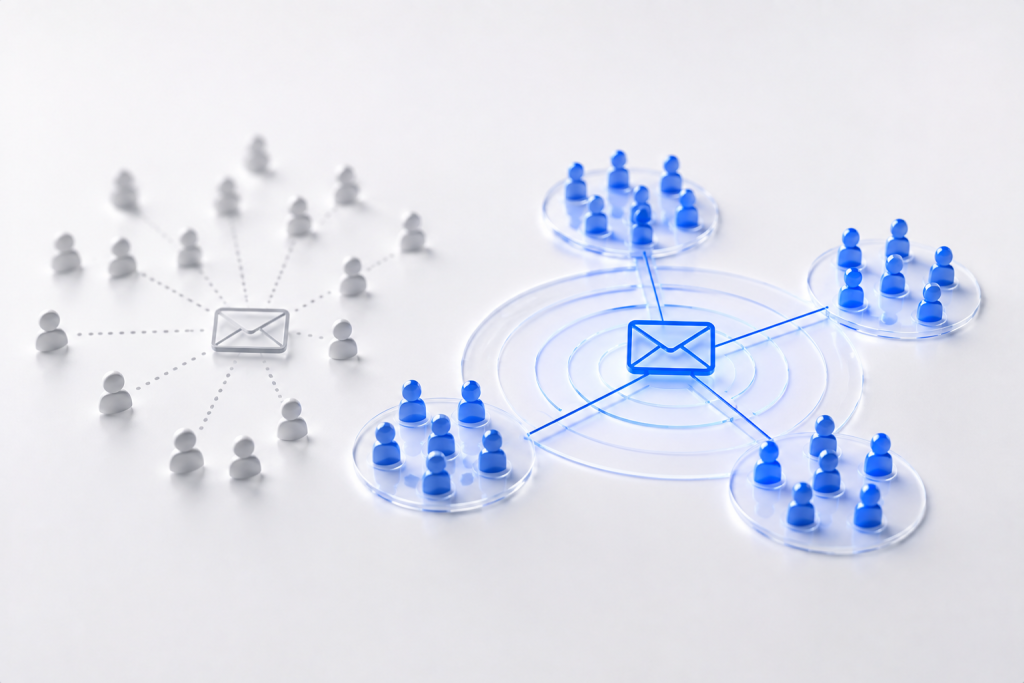
Segmentation is the single most important factor in B2B email marketing strategy, and it is also the most skipped. Most teams segment by firmographic data alone (industry, company size, job title) and stop there. That is a start, not a strategy.
Useful segmentation for B2B email campaigns usually layers three types of data:
Firmographic: industry, company size, revenue band, geography. This determines whether your offer is even relevant to the recipient.
Behavioral: what pages they visited, what content they downloaded, whether they attended a webinar, how recently they engaged. This tells you what they actually care about right now.
Intent signals: third party intent data, search behavior, competitor research activity. This tells you when someone is actively evaluating a solution rather than just curious.
The combination matters more than any single layer. A VP of Operations at a mid market manufacturer who downloaded a pricing comparison last week and is showing active buying intent should never receive the same email as a marketing manager who read one blog post six months ago. Yet in most B2B email programs, they do.
If you want a deeper breakdown of using intent data to time outreach correctly, we cover this in Intent Based Marketing: How to Reach B2B Buyers at the Right Moment. Pairing intent signals with segmentation is what separates campaigns that convert from campaigns that get archived.
A practical starting point: segment your list into at least four groups before your next send, cold leads with no engagement, engaged leads who opened or clicked but have not converted, active buyers showing intent signals, and existing customers. Write a different message for each. This alone will outperform most one size fits all campaigns.
Email Deliverability: The Problem Nobody Notices Until It Is Too Late
B2B email deliverability does not announce itself. Your open rates drop slowly, your bounce rate creeps up, and eventually your domain reputation is damaged enough that even your best content lands in spam. By the time most teams notice, the fix takes weeks, not hours.
A few things actually move the needle on deliverability:
Domain authentication is non negotiable. SPF, DKIM, and DMARC records need to be set up correctly and monitored. Mailbox providers like Google and Microsoft have tightened requirements significantly, and unauthenticated domains get flagged fast, especially at any real sending volume.
List hygiene beats list size. A smaller, engaged list will typically outperform a large, bloated one where a meaningful share of addresses are dead, mistyped, or belong to people who have not opened an email in a year. Run regular list cleaning, remove hard bounces immediately, and suppress chronically unengaged contacts rather than emailing them into oblivion.
Sending reputation is earned gradually. New domains or new IPs need to warm up with low, consistent volume before scaling. Sending a large volume of email from a brand new domain on day one is one of the fastest ways to get flagged.
Engagement signals matter more than volume. Inbox providers track opens, replies, deletes without opening, and spam complaints as reputation signals. A smaller, more relevant send that gets opened and replied to protects your domain far better than a mass blast that gets ignored or reported.
If your B2B email marketing strategy includes any cold outreach component, separate that sending infrastructure entirely from your marketing domain. Mixing cold outbound volume with nurture and newsletter sends on the same domain is one of the most common and most damaging mistakes we see.
Best B2B Email Marketing Platforms (And Which One Actually Fits You)
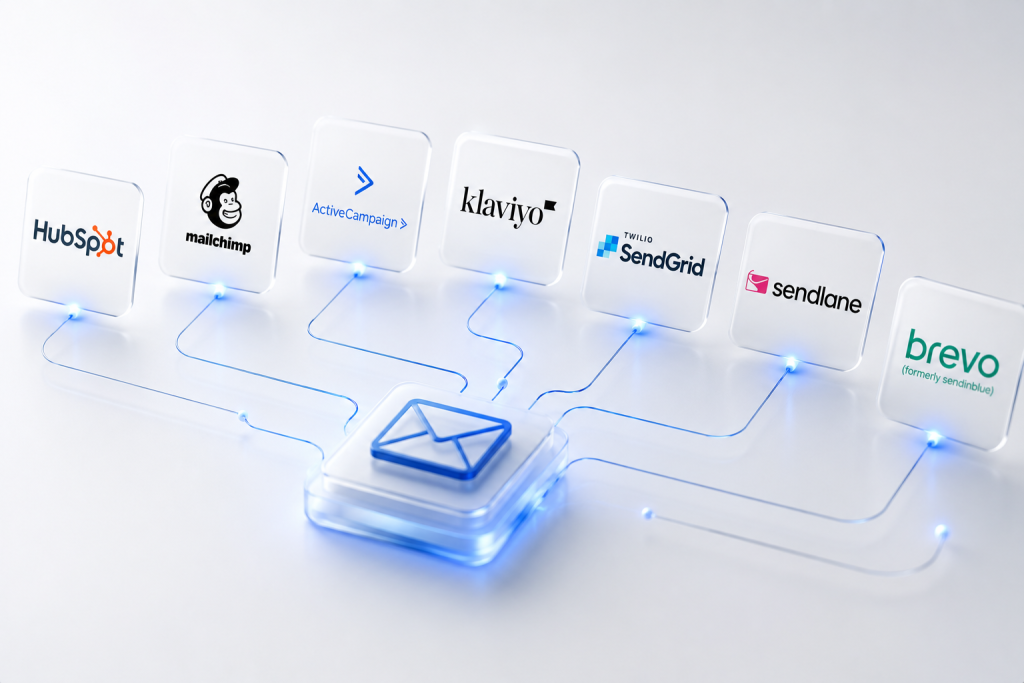
Most platform roundups either list ten logos with no real opinion or pick a single “best” tool that ignores how differently B2B teams actually sell. Below are the clearest top picks by use case, based on current platform comparisons, along with why each one earns the recommendation.
Best all in one platform for larger B2B teams: HubSpot. HubSpot wins when marketing, sales, and service need to run off one shared record of the contact, not a synced copy of it. Its CRM native approach means lead scoring, pipeline stage, and email personalization all pull from the same data, which is what makes multi touch revenue attribution actually reliable instead of estimated. The tradeoff is cost, pricing scales quickly once you move past entry tiers, and setup complexity is real. It fits best once a team has ten or more people running coordinated marketing and sales motions. See a detailed HubSpot vs. ActiveCampaign comparison
Best value pick for automation heavy teams: ActiveCampaign. For teams whose core need is deep, branching automation, lead scoring, and segmentation without paying for a full business suite, ActiveCampaign consistently comes out ahead on automation power per dollar in current comparisons. It includes a lightweight built in CRM, which is enough for many mid market B2B teams that do not need HubSpot’s full ecosystem. It is the stronger starting point for lean teams, and companies frequently outgrow it into HubSpot only once they need unified marketing, sales, and service reporting. Compare current pricing and automation depth.
Best for cold outreach and high volume deliverability: Instantly. Nurture and newsletter platforms are not built for cold sending, and using one for outbound is a common way to damage domain reputation. Instantly is a popular choice for cold outreach, offering features such as unlimited sending accounts, built in warmup, and tools designed to support deliverability at scale. Smartlead is the closest alternative and is specifically favored by agencies managing multiple client domains and inboxes. Read a current cold email platform comparison.
Best for data enriched, account based targeting: ZoomInfo Marketing. Teams whose biggest bottleneck is contact accuracy and account level intent, not campaign execution, benefit from a platform that combines verified B2B contact data with the sending engine itself. This matters most for ABM heavy B2B motions where targeting the right account matters more than automation depth. See how it fits into a broader platform comparison.
How to use this list. Match the pick to your sales motion, not the other way around. If marketing and sales already share a CRM and pipeline, HubSpot removes friction. If automation depth matters more than an all in one suite, ActiveCampaign is the stronger value. If the goal is outbound volume, keep that sending entirely separate from your nurture domain and use a deliverability focused platform like Instantly or Smartlead. If the current bottleneck is bad or outdated contact data, an enrichment led platform like ZoomInfo Marketing solves a different problem than any of the above and may need to sit alongside your main platform rather than replace it.
Pricing and feature sets in this space shift often, so treat the picks above as a shortlist to trial against a real segment of your own list, not a final decision. Deliverability and reply data from your own send will tell you more than any comparison article, including this one.
Nurture Sequences That Actually Move Leads Forward
A nurture sequence exists to do one job: move someone from curious to ready, without making them feel chased. Most B2B lead nurturing emails fail because they are structured around the sender’s sales stages instead of the buyer’s actual questions.
A nurture sequence that works usually follows this shape:
Email 1, delivered immediately: Deliver on the promise. If someone downloaded a guide, send the guide with zero friction and no upsell attached. Trust is built here, not spent.
Email 2, two to three days later: Add context. Share a related insight, a common mistake in their industry, or a short case study relevant to what they engaged with. No pitch yet.
Email 3, about a week in: Address a specific objection or question your sales team hears often. This is where credibility gets built, answer it honestly rather than deflecting to a sales call.
Email 4, roughly ten days in: Make a low friction offer, a short assessment, a relevant comparison guide, or a specific and narrow question that invites a reply rather than a generic “let’s chat” CTA.
Email 5 and beyond: Shift to a slower cadence, one email every one to two weeks, mixing value content with occasional soft offers, until the lead either converts or clearly signals they are not ready.
The sequences that convert are the ones that treat replies as the primary goal, not clicks. A short, direct email asking a specific question will consistently outperform a long, polished email pushing toward a demo booking link. Every email in the sequence should also be easy to stop, because forcing someone to unsubscribe rather than making it easy damages both deliverability and brand trust.
Subject Lines and Copy That Get Read, Not Just Opened
Open rates are an increasingly unreliable metric due to Apple Mail Privacy Protection and similar changes, but subject lines still control whether an email gets read or deleted.
What works consistently in B2B:
Specificity beats cleverness. “3 things slowing down your outbound pipeline” can be more effective than “Are you doing this wrong?” because B2B buyers are busy and scanning. Specificity signals relevance instantly.
Conversational framing can make subject lines feel more personal and less like formal marketing copy, particularly for nurture and sales adjacent emails. The best approach is to test different styles with your own audience rather than assuming one format will always perform better.
Avoid relying on simplistic lists of “spam trigger words.” Excessive punctuation, ALL CAPS, misleading subject lines, poor list quality, authentication problems, low engagement, and spam complaints can all contribute to deliverability problems. Context and overall sender reputation matter more than avoiding a handful of individual words.
For body copy, the same principle applies throughout this whole guide: relevance over polish. Short paragraphs, one clear point per email, and a single call to action outperform long emails trying to cover everything at once. If a recipient has to work to figure out what you want them to do, most will simply do nothing.
Metrics That Actually Matter
Open rate alone is not a reliable metric anymore, and click through rate tells you engagement without telling you intent. For B2B email marketing specifically, prioritize:
Reply rate, especially for nurture and cold sequences, since a reply signals real interest regardless of whether it is positive or negative.
Meeting or demo booked rate, tracked per segment, not just in aggregate, since this shows which audiences are actually converting.
List growth quality, meaning how many new subscribers come from qualified sources versus generic lead magnets that attract the wrong audience.
Unsubscribe and spam complaint rate, watched closely as an early warning system for both content fatigue and deliverability risk.
Vanity metrics look good in a monthly report. Reply rate and meeting rate are what your pipeline actually depends on.

What to Stop Doing in B2B Email Marketing
A few habits quietly damage results across almost every B2B email program we review:
Stop sending the same sequence to every segment regardless of behavior or intent signals. Relevance is the entire game now.
Stop buying lists. Purchased and scraped lists damage deliverability, produce almost no qualified replies, and put domain reputation at risk for the entire company, not just one campaign.
Stop measuring success by open rate alone. It is a directional signal at best given current privacy changes, not a reliable performance metric.
Stop writing every email like a press release. B2B buyers respond to direct, conversational, specific messages, not corporate announcements.
Stop ignoring unengaged contacts instead of re engaging or removing them. A stagnant list slowly poisons deliverability for every email that follows.
A Simple Framework to Apply This Week
If you only change one thing after reading this, do this: pull your list, segment it into cold, engaged, active intent, and customer groups, and audit your current sequence against each group. Anywhere a single generic sequence is going to all four groups, that is your highest impact fix.
From there, tighten deliverability basics (authentication, list hygiene, warmup), rewrite your nurture sequence around buyer questions instead of sales stages, and start tracking reply rate as a primary metric instead of open rate.
None of this requires new tools. It requires treating your list like a group of specific people with specific problems, not a database to broadcast into. If your team doesn’t have the bandwidth to rebuild this properly in house, this is the kind of segmentation, deliverability, and nurture work our email marketing services are built to handle end to end.
Frequently Asked Questions
What is B2B lead What is the difference between cold email and B2B email marketing? generation?
Cold email targets people with no prior relationship to your brand, usually to start a first conversation. B2B email marketing includes nurture, newsletters, and re engagement for contacts already in your funnel. The strategies, cadence, and metrics for each are different.
How often should B2B nurture emails be sent?
Early in a sequence, every two to three days works well while interest is fresh. After the first two weeks, slow to every one to two weeks to avoid fatigue while staying visible.
What is a good reply rate for B2B email marketing?
There is no universal benchmark. Results vary significantly by audience, offer, list quality, relationship, channel, and campaign type. Compare performance against your own qualified pipeline and conversion data rather than relying on a single industry average.
Do I need an enterprise platform to run effective B2B email marketing?
No. A platform only needs to match your current list size, sales motion, and integration needs. Many effective B2B email programs run on mid tier platforms and scale up only once automation and reporting needs outgrow the tool, not before.
ON THIS PAGE
- What B2B Email Marketing Means and How It Differs From Cold Email
- Segmentation: The Difference Between Relevant and Ignored
- Email Deliverability: The Problem Nobody Notices Until It Is Too Late
- Best B2B Email Marketing Platforms (And Which One Actually Fits You)
- Nurture Sequences That Actually Move Leads Forward
- Subject Lines and Copy That Get Read, Not Just Opened
- Metrics That Actually Matter
- What to Stop Doing in B2B Email Marketing
- A Simple Framework to Apply This Week
- Frequently Asked Questions
Final Thought
The B2B email marketing programs that consistently generate pipeline are not the ones with the most polished templates or the most expensive platform. They are the ones built on real segmentation, protected deliverability, a platform that fits the sales motion, and sequences designed around what the buyer actually needs to hear next. Get those right, and the replies follow.
Want Your Email List to Actually Do This?

SALES OFFICE
- American General Center 2929 Allen Parkway, Suite 200, Houston, Texas – 77019, USA.
- +1 254 277 8874
DELIVERY CENTER
- C Core, 4th Floor, Office No. 4030 Solitaire Business Hub, Sr. No. 207 Viman Nagar, Clover Park Opposite NECO Garden Society Pune, Maharashtra 411014
- contact@manditglobal.com